
A Breakthrough in Yoghurt Production: Heat-Induced Uncoupling of Growth and Acidification
Yoghurt production has long been a balancing act between managing bacterial growth and acidification to achieve the right texture, flavor, and shelf life. Now, groundbreaking research from the Technical University of Denmark (DTU) reveals a novel method that decouples these two processes, offering major benefits for yoghurt manufacturers and consumers alike.
The Traditional Challenge
Traditional Method:
- In traditional yoghurt production, all milk is inoculated with starter culture at once and incubated at approximately 42°C.
- Both bacterial growth and acidification (pH drop) proceed simultaneously during fermentation for about 4–6 hours.
- Once desired acidity is reached (pH ~4.5), the product is cooled to halt fermentation.
- This method often leads to high bacterial counts and significant post-acidification during storage, which can shorten shelf life and sometimes result in over-sour yoghurt
Typically, yoghurt fermentation involves lactic acid bacteria (LAB) growing and simultaneously producing lactic acid from lactose. This acidification lowers pH, creating yoghurt’s signature tart taste and texture. But this coupling of growth and acidification limits production flexibility and can cause over-acidification, negatively impacting texture and shelf life due to ongoing acid increase even after packaging; a phenomenon known as post-acidification.
The Novel Two-Stage Fermentation Approach
DTU researchers developed a two-temperature step fermentation process that strategically separates bacterial growth from acidification:
- Stage 1 – Growth at 42°C: The yoghurt culture is incubated at its optimal growth temperature, allowing bacteria to multiply efficiently and build biomass.
- Stage 2 – Acidification at 51°C: The temperature is then increased to 51°C, a level at which bacterial growth stops, but acidification continues robustly. Bacteria remain metabolically active and convert lactose into lactic acid without further proliferation.
These are the steps for this novel fermentation process:
- 20% of the total milk volume is added to the yoghurt tank together with starter culture.
- Fermentation takes place at 42 °C for 4–6 hours.
- The remaining 80% of milk is added to the rest of the milk at 51 °C and continue incubation for 1–2 hours.
- At this stage, culture growth is limited while acidification continues.
- Adjust the temperature back to 42 °C until the desired pH of 4.6 is reached.
- Cool the yoghurt down to storage temperature, typically 4 °C.
Why Is This Important?
This heat-induced uncoupling of growth and acidification provides 5 key transformative advantages:
- Reduced Culture Costs: Since growth ceases in the second stage but acidification continues, less starter culture is needed overall, saving money. With the new method, researchers use just 20% of the usual amount of starter culture. Reduced culture expenses by a factor of 5. Currently, dairies typically use up to 0.18 grams of starter culture per liter of milk. Given the scale of production, the cost of bacterial cultures can be substantial.
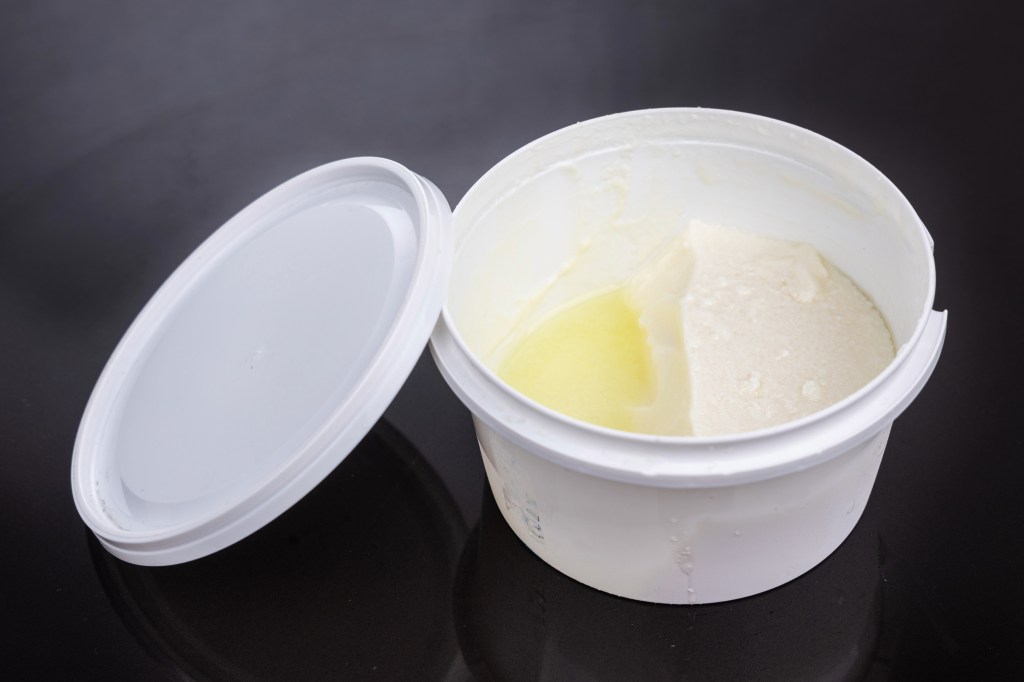
The use of starter culture has been reduced by a factor of five, resulting in a significant cost saving, which is particularly important in an industry with narrow profit margins, states Christian Solem. The extended shelf life also enhances production planning and logistics. Yoghurt is usually produced in large batches, and each production run requires cleaning and reconfiguration. With a longer shelf life, larger and potentially more continuous production processes become feasible. - Improved Stability – Minimized Post-Acidification: Controlling bacterial growth limits acid build-up during storage, significantly improving product shelf life and sensory quality. Post-acidification occurs 5–10 times more slowly due to the reduced bacterial content. Post-acidification is one of the most important quality concerns in yoghurt production. It can cause overly sour, bitter, and prone to phase separation yoghurt. Phase separation (also known as syneresis) is a phenomenon where free whey appears on the surface of yoghurt as shown below.
- Enhanced Product Shelf life : The 51°C step acts as a mild pasteurisation phase. The heat treatment at 51°C helps eliminate spoilage yeasts and molds, further extending shelf life and reducing waste. It is stated that it can eliminate up to 99.9% of yeast cells and mould spores. The exact improvement of shelf life has not yet been finalized, but according to the researchers, it is estimated to be greater than the current 3–4 weeks.
- Improved Process Flexibility: The method allows producers to fine-tune fermentation by adjusting the timing and temperature, reducing batch variability.
- Easy to Implement: This new process requires no new equipment, only adapting temperature controls in existing production lines, making it accessible and scalable.
Industry Implications
For food technologists and process engineers, this represents a paradigm shift. It demonstrates how understanding microbial physiology under stress conditions can be harnessed to optimize fermentation and product quality. It also opens opportunities to redesign yoghurt production protocols for economic and quality gains while maintaining clean-label, additive-free formulations.
Looking Ahead
This innovation showcases how blending microbiology insights with process engineering creates impactful advances in food manufacturing.
This innovative heat-induced uncoupling method simplifies controlling yoghurt acidification, cuts costs, and improves shelf-life, making it a promising game-changer in dairy processing.
REFERENCEs
Gu, L., Tadesse, B. T., Solem, C., & Zhao, S. (2025). Smoking hot – Heat-induced uncoupling of growth & acidification in yoghurt production helps save costs and results in reduced post-acidification and improved shelf life. Food Bioscience. https://doi.org/10.1016/j.fbio.2025.107046
DTU (2025). New method may transform yoghurt production. DTU Food. https://www.food.dtu.dk/english/newsarchive/2025/06/new-method-may-transform-yoghurt-production



 FFFoodScience || Future-Forward Food Science