
The food and beverage industry faces mounting pressures from multiple directions. Companies must navigate supply chain disruptions, evolving consumer demands, cost pressures from inflation, and skilled labor shortages—all while maintaining the fundamental requirements of food safety, quality, and regulatory compliance. Amid these challenges, sustainability has emerged as a critical priority, demanding reductions in food waste, greenhouse gas emissions, and more efficient resource utilization.
Innovative processing technologies offer a pathway to address these sustainability challenges while delivering operational advantages and better final product quality. The most impactful new technologies not only replace existing processes but can eliminate entire operational steps, maximizing efficiency gains and emission reductions as well as final product quality.
This overview examines five transformative technologies:
- Pulsed Electric Fields (PEF)
- Induction heating
- Ohmic Heating
- Ultrasound
- Counter Flow Injection Technology (CFIT)
Each represents a pathway to reduced energy consumption, improved yields and final product quality, and more sustainable food production.
Moving Beyond High-Carbon Processes
One significant trend involves transitioning away from carbon-intensive operations like natural gas boilers toward electrified alternatives. This shift proves particularly beneficial for facilities with access to renewable energy contracts or on-site renewable generation capabilities.

Pulsed Electric Fields
Pulsed Electric Field (PEF) technology employs high-voltage electrical pulses to create microscopic openings in cellular structures as materials pass between electrodes. This electric-powered method offers remarkable versatility, with applications spanning preservation, extraction, tissue softening, accelerated drying and freezing, reduced blanching requirements, and enhanced fermentation rates.
Below is small list of the applications of PEF in the food industry, but no limited to that:
Examples of Applications of Pulsed Electric Fields in Food Processing
Here is a table:
| Application Area | Specific Application |
| Food Safety & Preservation | Non-thermal pasteurization of juices and liquid foods |
| Potato Processing | French fry and chip production enhancement |
| Juice Extraction | Improved yields from fruits and vegetables |
| Wine Production | Enhanced color and polyphenol extraction |
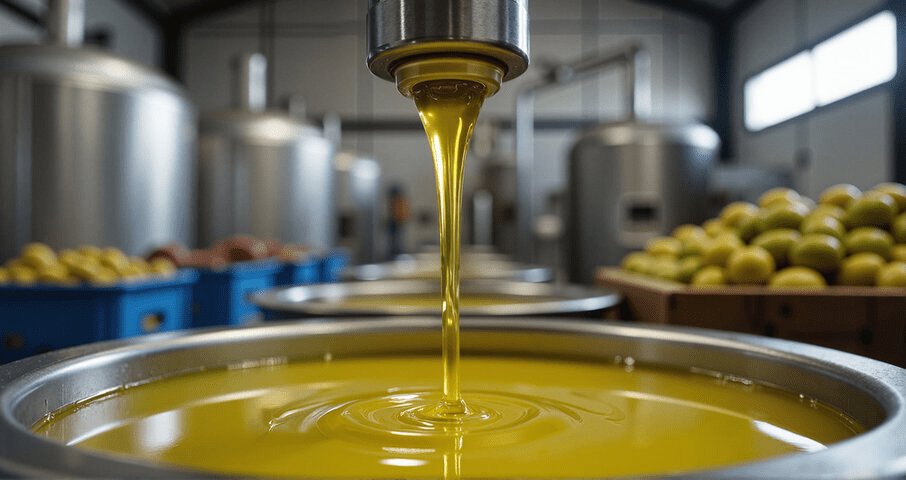
| Olive Oil Production | Increased extraction efficiency for extra virgin olive oil |
| Meat Processing | Tenderization and improved marinating |
| Vegetable Processing | Enhanced cutting, blanching, and drying |
| Fermentation Enhancement | Accelerated brewing and dairy fermentation |
| Drying Applications | Improved efficiency in food dehydration, including animal and plant based products. |
| Microalgae & Biotechnology | Extraction of bioactive compounds and proteins |
Find out why the food industry of Cyprus must adopt PEF here.
Induction Heating
Induction heating technology offers a more energy-efficient alternative to conventional gas boiler systems used throughout the food industry for generating hot water and steam. Similar to domestic induction cooktops, industrial induction systems use electrically powered coils wrapped around processing pipes, with internal heating elements that warm flowing liquids while providing mixing action for consistent temperature distribution.
This technology achieves remarkable efficiency, with ~95% of energy directly transmitted to the heated liquid, substantially improving efficiency while reducing greenhouse gas emissions. Applications include trim heating, kettle boosting, cleaning-in-place operations, and heating various liquid products for hot-fill, UHT treatment, pasteurization of beverages, purees, sauces, stocks, and oils.

The solid-state electronics enable rapid power modulation in response to temperature fluctuations, reducing startup times and shortening heating zones, which minimizes waste during startup or recovery from production stoppages. The precise electrical control allows tighter temperature tolerances, potentially enabling lower target temperatures than steam-based systems that respond more slowly. Additionally, the controlled power application can reduce temperature differentials between products and heating surfaces, potentially minimizing fouling issues.
Ohmic Heating
Ohmic heating (also known as Joule heating) is used for thermal processing by applying electricity to a product as it passes through two electrodes, which causes resistive heating of the product (the resistance of the product to the current causes it to heat up). Ohmic heating can be very energy efficient, with ~98% of the applied electrical power being converted to useful heat.
This technology is particularly beneficial for large food pieces in a liquid which need to be heated together in a continuous flow. In a scraped surface heat exchanger, adequate processing of the particulates is typically achieved by an overprocessing of the liquid component (in order to achieve the right temperature within the particulates). Ohmic heating overcomes this, as it can heat particulates in liquid at the same rate as the liquid itself, therefore reducing overprocessing of the liquid.
Ultrasound
Ultrasound is a sustainable and efficient technology that enhances various food processing methods, serving as an alternative to conventional heat-based techniques that may compromise product quality; its effectiveness is further amplified when combined with traditional methods, and it significantly reduces overall processing time.
Ultrasound technology has found widespread application across various food processing operations due to its eco-friendly, non-thermal nature and ability to significantly enhance efficiency.
In filtration, ultrasound vibrations improve membrane permeation and reduce processing time, especially for liquid foods like juices.
It facilitates freezing and crystallization in dairy, fruits, vegetables, and meats by promoting uniform heat transfer, preserving microstructure, and forming smaller ice crystals. During thawing, it accelerates the process, maintains color, prevents lipid oxidation, and reduces dehydration.
In brining and pickling of products such as cheese, meat, and fish, ultrasound allows for uniform salt distribution, reduced sodium use, and longer shelf life.
Its application in drying intensifies mass transfer, shortens drying time, and improves organoleptic qualities. In rehydration of dried foods, ultrasound speeds up absorption, making the process quicker and more efficient. These versatile applications underscore ultrasound’s transformative role in modern, sustainable food processing.
For foaming processes involving proteins, ultrasound enhances foam capacity. It also aids degassing and deaeration in beverages, preventing overflow and minimizing bottle breakage.
In cooking, ultrasound ensures faster heat transfer, better nutrient retention, enhanced flavors, and tenderization in meat and vegetables.
It supports emulsification of products like mayonnaise by improving rheological properties and stability with less time.
In cutting soft foods such as cheese and bread, ultrasound enables clean, precise cuts with minimal waste.
For sterilization and pasteurization of milk and juice, it achieves effective microbial inactivation at lower temperatures and energy use.
It enhances extraction efficiency from plant and food materials while using less solvent and time.
Interested for more information regarding applications of Ultrasound in food industry? Read here.
Interested in applications of Ultrasound in olive oil production? Read here.
Counter Flow Injection Technology
Many food and beverage products require stable emulsions combining oil and aqueous phases. Achieving shelf-stable emulsions demands small, uniform droplet sizes, traditionally accomplished through high-pressure homogenization, colloid milling, rotor-stator systems, ultrasonics, or membrane technologies. Conventional manufacturing typically involves creating pre-emulsions with larger droplets, then further processing through single or multi-stage homogenization.
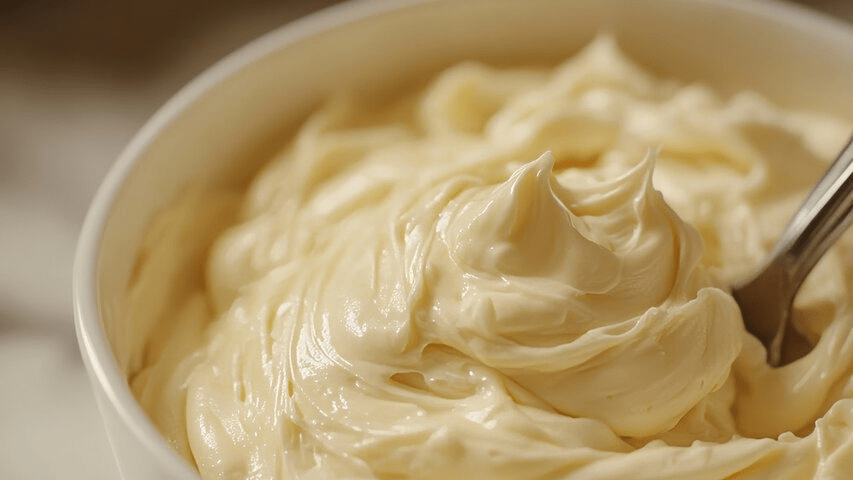
Counter Flow Injection Technology (CFIT) presents an innovative approach originally developed for polymer applications and now adapted for pharmaceutical, personal care, and food industries. This direct homogenization method injects two phases directly into a collision chamber without requiring pre-emulsion preparation, eliminating an entire processing step and its associated energy requirements.
The collision chamber facilitates multiple simultaneous mechanisms including atomization, collision, shear, and turbulent mixing. Various nozzle sizes (0.8 to 2 mm) allow process customization for different applications.
CFIT offers several advantages beyond eliminating pre-emulsion steps: millisecond residence times, lower operating pressures (40-100 bar versus up to 400 bar for competing technologies), reduced temperature increases during processing, and the possibility of lower overall operating temperatures. These characteristics translate to reduced energy requirements and gentler treatment of proteins due to lower temperatures and shear stress.
The technology enables different temperature operations for oil and water phases, allows additional compound injection into the mixing chamber, and produces exceptionally stable emulsions. Long-term stability testing has demonstrated emulsion integrity lasting over a decade, suggesting potential for extended food product shelf-life and reduced consumer food waste.
Therefore, Counter Flow Injection Technology (CFIT) represents an innovative approach to food processing that streamlines emulsion creation by directly injecting multiple fluid phases—such as oil and water—into a specialized mixing chamber. Unlike traditional methods that require energy-intensive pre-mixing steps followed by multi-stage homogenization processes, CFIT eliminates the pre-emulsion stage entirely, resulting in significant energy savings and reduced processing time. This direct injection method produces fine, stable emulsions with uniform droplet sizes essential for product shelf-life stability, making it an efficient and sustainable alternative to conventional homogenization techniques including high-pressure systems, colloid milling, and ultrasonic processing.
The Path Forward
These diverse food processing technologies showcase how innovation can drive both sustainability and operational efficiency. Heating methods like Induction Heating and Ohmic Heating provide energy-efficient (>95%), precise thermal treatment that reduces waste and preserves product quality. Meanwhile, non-heating techniques such as Pulsed Electric Fields, Ultrasound, and Counter Flow Injection Technology enhance processes like extraction, emulsification, cutting, drying, re-hydration and freezing without relying on heat, often shortening processing times and improving yields. These advancements offer the food and beverage industry of Cyprus powerful tools to optimize resource use, lower emissions, and meet growing demands for sustainable production while maintaining product excellence and economic viability. FFFoodScienCy can help your company in preparing proposals for EU and CY funding programs.
Rereference
Mahathir, M. (2023, June 1). Reducing the impact. Food Science and Technology, 37(2), 46–49. https://doi.org/10.1002/fsat.3702_11.x
Ariç Sürme, S. and Sabancı, S., 2021. The usage of Ohmic heating in milk evaporation and evaluation of electrical conductivity and performance analysis. Journal of Food Processing and Preservation, 45(9), p.e15522.
Bhargava, N., Mor, R. S., Kumar, K., & Sharanagat, V. S. (2020). Advances in application of ultrasound in food processing: A review. Ultrasonics Sonochemistry. Advance online publication. https://doi.org/10.1016/j.ultsonch.2020.105293



 FFFoodScience || Future-Forward Food Science